Enlargement of Gums: Causes, Symptoms & Easy Fixes
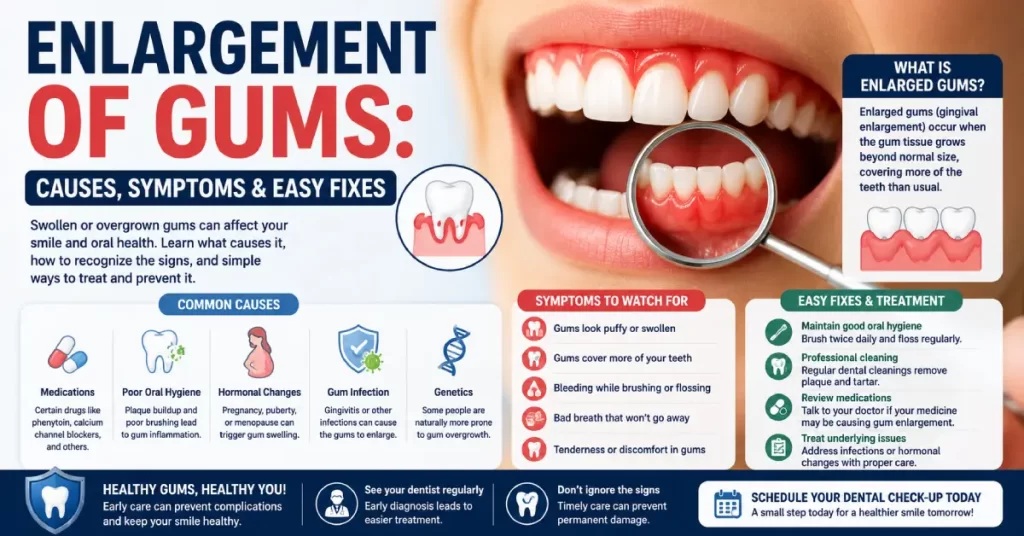
enlargement of gums
Enlargement of Gums: What It Means and How to Deal With It
So your gums look puffier than usual. Maybe they’re even climbing up over the edge of your teeth a bit. That’s enlargement of gums, and trust me, it happens to way more people than you’d think just looking around. For some it creeps up slowly — months go by, barely noticeable, until one day you catch it in the mirror and think, wait, when did that start? For others it shows up almost overnight, usually right after starting some new medicine.
Here’s the part that should make you feel better though: this is, in almost every case, something you can actually deal with. You just need to figure out what’s driving it. That’s really what this whole article is about — the actual causes, catching it early, and what genuinely helps versus what’s just repeated online without anyone checking if it’s true. No confusing dental terms just for the sake of sounding smart.
What Is Enlargement of Gums, Exactly?
Put simply, the gum tissue grows bigger than it’s supposed to. Sometimes enough to cover part of a tooth, sometimes just a little puffier along the edge. Dentists call it gingival enlargement, or gingival hyperplasia if you want to sound fancy at your next checkup. But here’s the bit most people miss entirely — it isn’t really its own disease. It’s more of a signal. Like a check-engine light, except for your mouth.
Most people miss it early on because, well, it usually doesn’t hurt much at the start. It just sort of arrives quietly. Give it a few months though and it starts messing with how you bite down, how clearly you talk, even how confident you feel smiling in photos. Small thing that isn’t actually that small.
Why Should You Even Care?
Because it’s not just cosmetic. Overgrown gum tissue traps bits of food in spots a toothbrush can’t really reach, and suddenly brushing feels like you’re fighting a losing battle every single night. Bacteria love those trapped little pockets, by the way. Give it enough time unchecked and you’re looking at deeper gum disease, sometimes bone loss around the teeth eventually. Not exactly something to shrug off and forget about.
What Actually Causes Gum Overgrowth?
Honestly, there’s no single answer here. It depends a lot on the person, which is annoying if you’re trying to self-diagnose from a blog post (like this one, ironically).
Poor oral hygiene is probably the most common one — plaque sitting around too long just irritates the tissue until it reacts by growing. Certain medications matter too, especially some seizure and blood pressure drugs. Hormonal shifts during pregnancy or puberty can cause a temporary version of the same thing. Then there’s genetics — a rare inherited condition called hereditary gingival fibromatosis runs in some families. Underlying illnesses, leukemia being one example, sometimes show symptoms in the gums before showing up anywhere else. And mouth breathing, of all things, dries the tissue out and irritates it slowly over time.
Medication-Induced Gum Enlargement
This one genuinely surprises people. Phenytoin (prescribed for seizures), cyclosporine (an immune suppressant), and calcium channel blockers like nifedipine (for blood pressure) are all pretty well documented as triggers here. A lot of folks just blame their own brushing when really, it’s the medicine causing the whole thing.
If you’re taking any of these and notice swelling starting — please don’t just stop the medication yourself. Talk to your doctor first. There’s usually some alternative that won’t touch your gums the same way, or at least a dose adjustment worth trying.
Symptoms Worth Paying Attention To
Catching this early really does make everything simpler down the road. Here’s what tends to show up:
| Symptom | What It Looks Like |
|---|---|
| Swollen gum edges | Puffy, rounded gum line instead of a sharp edge |
| Bleeding gums | Blood while brushing or flossing |
| Color change | Bright red, sometimes almost dusky purple |
| Tooth coverage | Gum tissue slowly creeping over the tooth crown |
| Bad breath | Still there right after brushing, oddly enough |
| Chewing discomfort | A mild ache biting into harder foods |
Notice two or three of these together? That’s usually your cue for a dental visit rather than just waiting around hoping it settles on its own.
How Do Dentists Actually Diagnose It?
Generally it starts with just a look, plus a quick chat about your medical history and whatever medications you’re on. That conversation alone, more often than not, uncovers the cause faster than any lab test could. Occasionally, if something looks unusual, they’ll take a tiny tissue sample — mostly to rule out anything more serious hiding underneath.
What to Do If You Notice Gum Swelling
Book a dental appointment first. Don’t just wait around hoping it fixes itself, because it usually doesn’t. Bring your medication list along too, since that one step alone speeds up diagnosis quite a bit. From there:
Complete Steps
- Get a professional cleaning done — built-up plaque and tartar tend to make the swelling worse.
- Ask about medication alternatives if a drug seems to be behind it.
- Tighten up your home routine. Brush twice daily, floss gently each evening.
- Actually show up to your follow-up visits. Swelling has a habit of creeping back if the cause isn’t managed.
- Consider a gingivectomy, but only if things are severe and nothing else has worked.
Most mild cases, in my experience anyway, get noticeably better just from the basics. Surgery’s really the last option on the list, not the first.
Treatment Options for Enlargement of Gums
What actually works depends heavily on the cause. There isn’t one fix that suits everybody, no matter what some articles claim.
Non-surgical routes usually start with professional scaling and root planing, clearing out plaque below the gum line where a regular toothbrush just can’t reach. Switching to a soft-bristled brush and gentler technique helps too, alongside antimicrobial rinses to keep bacteria in check. And if medication’s the root cause, adjusting or swapping it — always with a doctor involved, never alone.
Surgical Treatment
When tissue’s grown too much to respond to regular cleaning, a gingivectomy might come up. It’s a fairly minor procedure honestly — reshaping and trimming the excess tissue under local anesthesia. Recovery runs about one to two weeks, give or take a few days depending on the person.
Home Remedies That Genuinely Help
They won’t fix the root cause by themselves, to be clear. But paired with actual treatment, they do help calm things down noticeably.
Step-by-Step Guide for At-Home Gum Care
- Rinse with warm salt water twice a day to bring inflammation down a notch.
- Brush gently in circular motions, not scrubbing back and forth like you’re cleaning a pan.
- Floss once daily, sliding it in rather than snapping it against the gum.
- Use an antiseptic mouthwash if your dentist happens to suggest one.
- Drink enough water through the day. Dry mouth just makes irritation worse.
- Snack on crunchy produce, apples and carrots being the obvious ones, since chewing them helps clean teeth naturally.
None of this replaces actual professional care. But it does add up alongside it, more than people expect.
How to Stop Enlargement of Gums From Coming Back?
Prevention, if I’m honest, is mostly just consistency. Nothing fancy about it. Get checked every six months without skipping it. Stick to a steady brushing and flossing routine even on lazy days. Tell your doctor about gum changes whenever you start something new. Cut back on tobacco, since it slows healing considerably. And keep conditions like diabetes properly managed, because that ties in more than people realize.
Does Diet Really Affect Gum Health?
More than most people think, yeah. Sugar-heavy diets basically feed the exact bacteria that irritate your gums in the first place, while foods rich in vitamin C help the tissue repair. Leafy greens, citrus, a handful of nuts here and there — working more of that into meals genuinely helps over time. Not a magic fix by any stretch, but it does add up.
Enlargement of Gums vs. Normal Gum Swelling
People confuse these two constantly, so here’s the quick version.
| Feature | Normal Gum Swelling | Gum Enlargement |
|---|---|---|
| Duration | Days, maybe a couple weeks | Weeks to months, often ongoing |
| Cause | Minor irritation, brushing too hard | Medication, hormones, genetics |
| Tissue change | Just temporary puffiness | Real tissue growth, firmer texture |
| Resolution | Better hygiene usually clears it | Needs a professional look |
Mistakes People Make Way Too Often
Ignoring early changes and just hoping they disappear is probably the biggest one. Right behind it: brushing harder once gums look swollen, when gentler is actually what’s needed. Quitting prescribed medication without checking with a doctor first, skipping dental visits out of fear or discomfort, and assuming mouthwash alone can undo the overgrowth round out the list. Skip these and you’ll save yourself a good amount of time, and honestly, a fair bit of discomfort too.
Is Enlargement of Gums Actually Dangerous?
Most of the time, no — not life-threatening. But leave it alone long enough and plaque just keeps piling up in spots you genuinely can’t clean. That raises your risk of periodontal disease eventually, which can chip away at the bone holding your teeth in place over the years. Catching it early just keeps the whole thing simpler. Cheaper too, for what it’s worth.
When Should You Actually See a Dentist?
If your gums are covering more of the tooth than they used to, if bleeding just won’t quit, or if there’s discomfort sticking around past a week of better brushing — that’s your sign, plain and simple. Waiting longer usually just means a bigger, more involved fix later on.
Wrapping It Up
Enlargement of gums can feel a little unsettling when it shows up fast, no doubt about it. But in most cases, once the actual cause is figured out, it’s completely manageable. Nothing worth panicking over.
A decent hygiene routine, regular dental visits, and being upfront with your doctor about medications — that combination goes a long way toward keeping your gums in shape. Prevention really is the easier path here, by a wide margin honestly.
Noticed some swelling lately, or changes you can’t quite explain? Don’t sit on it. Book a checkup, mention whatever medications you’re taking, and ease into a gentler brushing routine starting today.
Frequently Asked Questions
Can enlargement of gums go away on its own?
Mild cases tied to poor hygiene often improve just from better brushing and flossing habits. Medication-related or genetic cases, though, usually need actual professional treatment before clearing up fully.
Is gum enlargement painful?
Not really, at least not early on. Some people do feel mild discomfort chewing or brushing once the tissue’s grown noticeably over the teeth, but that tends to come later.
Which medications commonly cause gum overgrowth?
Phenytoin, cyclosporine, and calcium channel blockers like nifedipine are the ones most often linked to it. Worth mentioning though, not everyone taking these ends up developing the condition at all.
How long does recovery from a gingivectomy take?
Roughly one to two weeks for most people. A bit of swelling and sensitivity in the first few days is completely normal, nothing alarming.
Can kids get enlarged gums too?
Yes, more often than people expect, actually. Usually it traces back to hereditary gingival fibromatosis, or shows up as a side effect of seizure medications given early in life.
Does pregnancy cause gum enlargement?
Hormonal shifts during pregnancy can trigger something called pregnancy gingivitis, temporary swelling that generally settles after delivery, assuming decent oral care along the way.
Can bad brushing alone cause severe gum overgrowth?
Not usually on its own, no. Poor hygiene can contribute to mild swelling for sure, but the severe stuff tends to trace back to medication, genetics, or an underlying health issue instead.
Should I stop taking my medication if my gums swell up?
No — please don’t stop a prescribed medication without talking to your doctor first. They can adjust the dose, or point you toward something that won’t affect your gums quite the same way.