Tonsillitis vs Strep: Key Differences You Need to Know
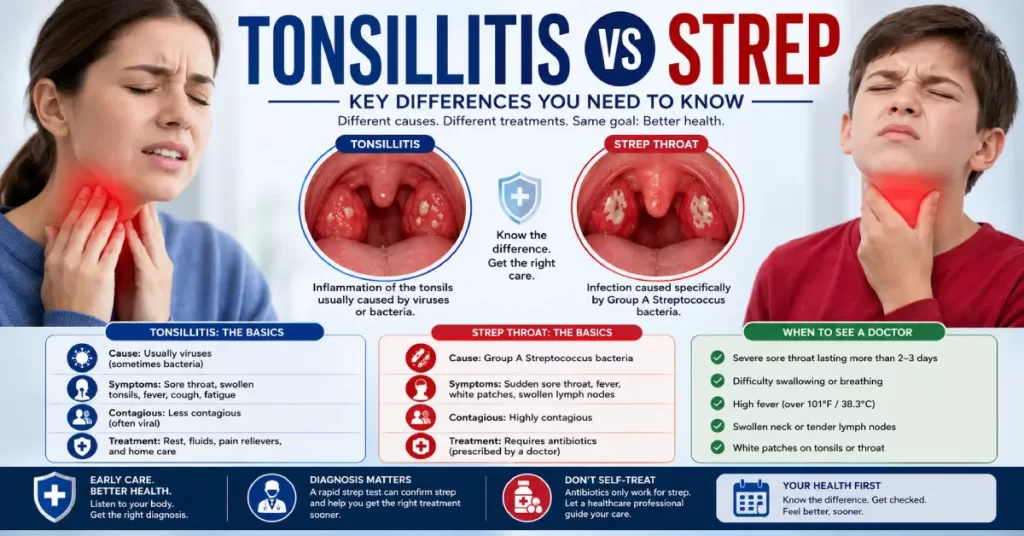
tonsillitis vs strep
Confused about tonsillitis vs strep? Learn the real differences in symptoms, causes, and treatment so you know exactly what you’re dealing with.
Introduction
Throat’s on fire. Swallowing feels like a bad idea. And now you’re lying there at 1am wondering — tonsillitis, or strep? Fair question, honestly. They live in the same spot, cause similar misery, and if you shine a phone light down your own throat they can look nearly identical to someone who isn’t a doctor.
But they’re not the same thing. Not quite. And getting it wrong can mean the difference between riding it out with tea versus needing antibiotics before it gets worse. So let’s actually break this down.
What Tonsillitis Actually Is
Tonsillitis means your tonsils — those two lumps at the back of your throat nobody thinks about until they’re throbbing — are inflamed. Their whole job is catching germs before they go any further into your body. When that job gets overwhelming, the tonsils swell up, go red, sometimes get coated in white or yellowish patches that honestly aren’t fun to look at in a mirror.
Here’s the catch though: tonsillitis doesn’t tell you why they’re swollen. It’s a description of the swelling, not a diagnosis of what caused it. Usually it’s a virus. Sometimes it’s bacteria. And that second option is exactly where strep shows up.
Colds and flu account for most cases. Epstein-Barr virus (the mono one) pops up sometimes too. When bacteria are behind it instead, it’s almost always Streptococcus pyogenes — which brings us to strep throat.
So What’s Strep Throat, Then?
Strep isn’t vague the way tonsillitis is. It names the actual bug: group A Streptococcus bacteria. Someone Googling “strep throat symptoms” at midnight is really just asking one thing — is this bacterial, do I need real medicine, or will tea and sleep handle it?
People tend to picture tonsillitis and strep as two totally different illnesses sitting side by side. They’re not. Strep is often just one specific cause of tonsillitis, out of several possible ones. You can have both labels apply to the exact same sore throat.
Why bother with the distinction? Because treatment splits hard from here. Viral tonsillitis mostly just needs time. Strep needs antibiotics — partly for comfort, but mainly because leaving it untreated can, rarely, lead to rheumatic fever or kidney trouble later.
Side-by-Side Comparison
| Feature | Tonsillitis | Strep Throat |
|---|---|---|
| Main cause | Usually viral, sometimes bacterial | Group A Streptococcus bacteria |
| Onset | Builds up over a day or two | Hits fast, sometimes overnight |
| Fever | Mild to moderate | Often high, above 101°F |
| Cough | Usually there | Usually missing |
| Swollen tonsils | Red, inflamed | Often white-patched |
| Lymph nodes | Sometimes swollen | Frequently tender |
| Treatment | Rest, fluids | Antibiotics |
| Contagious | Depends on cause | Yes, pretty easily |
What Actually Tips You Off?
This is where it gets messy, because so much overlaps. Throat pain, swelling, that generally wrecked feeling — both bring all of it.
Tonsillitis creeps. Pain builds over a day or two instead of hitting all at once. A stuffy or runny nose usually tags along, plus a cough that won’t quit and a fever that stays fairly low. Tiredness sneaks in slowly.
Strep is different. It moves fast — sometimes within hours you go from fine to miserable. Swallowing feels sharper, almost like glass, which sounds dramatic until it’s happening to you. Fever spikes higher, sometimes with chills thrown in. Little red spots might show up on the roof of your mouth. Neck glands get tender enough that touching them actually hurts.
And here’s the one clue that’s genuinely useful: no cough, no runny nose. Colds and viral tonsillitis basically always come with some congestion. Strep usually skips it entirely. Not a perfect rule — nothing here is — but worth mentioning if a doctor asks.
How Doctors Actually Sort This Out
You can’t self-diagnose this with a mirror, tempting as it is. A real visit tends to go like this.
- Doctor checks your throat and neck — redness, swelling, white patches, tender glands.
- Then questions. How fast did it start? Any cough? How high’s the fever? This alone narrows things down a lot before any test happens.
- Rapid strep test if strep seems likely — just a throat swab, results in fifteen or twenty minutes.
- If that’s negative but strep still seems possible, the swab might go to a lab for a fuller culture. Takes a day or two.
- Then treatment gets decided. Antibiotics for a confirmed bacterial case, supportive care if it looks viral.
The swab makes people gag for about half a second, and that’s genuinely the worst part.
Treating Whichever One You’ve Got
Viral tonsillitis doesn’t respond to antibiotics at all, so the whole approach is just making things bearable while your body handles it. Actual rest (not “rest while checking email” rest). Water, warm tea, broth, whatever keeps you hydrated. Salt water gargles a few times a day. Acetaminophen or ibuprofen for the fever and aches. Lozenges help short-term. A humidifier if your room’s dry.
Strep throat needs the real stuff.
Method
- Start whatever antibiotic your doctor prescribes — penicillin or amoxicillin, usually, unless you’re allergic.
- Finish the whole course. Feel fine by day three? Keep going anyway. Quitting early just lets whatever’s left over come back stronger.
- Stay home the first 24 hours on meds since you’re still contagious then.
- Keep treating symptoms alongside the antibiotics — pain relief, fluids, gargles still help.
- Give it 48 hours. Nothing improving by then? Call your doctor back — a different antibiotic might be needed.
Written out it looks like a whole ordeal. In practice it’s mostly “take the pills, don’t stop early, rest.”
When to Actually Go See Someone
Most sore throats don’t need a clinic visit. A few things do warrant one though: fever above 101°F that won’t budge after a couple days, trouble breathing or swallowing, pain bad enough you can’t eat or drink, visible pus on the tonsils, painfully swollen neck glands, symptoms that just won’t quit past a week, or a rash showing up with everything else. That last one especially — don’t ignore it, since it can point to scarlet fever.
Stuff That Actually Helps at Home
Warm honey-lemon tea soothes more than you’d think. Popsicles numb the pain for a bit — sounds silly, works anyway. Skip anything acidic or spicy, it just adds insult to injury. Steam loosens things up if congestion’s part of the picture. Sleeping slightly propped up eases nighttime throat pain more than people expect.
Does Tonsillitis Turn Into Strep?
Not exactly. It’s more accurate to say strep bacteria can cause tonsillitis from the start, rather than one thing slowly becoming another. What sometimes happens is a virus weakens your throat’s defenses just enough that bacteria — strep included — sneak in afterward. Part of why doctors get concerned if symptoms worsen instead of improving after a few days.
Keeping Yourself From Catching Either
Prevention overlaps a lot since both spread the same basic way — droplets, shared cups, close contact.
- Wash your hands often, especially around anyone coughing or sneezing.
- Don’t share drinks, utensils, or towels with someone showing symptoms.
- Cough or sneeze into your elbow.
- Swap your toothbrush once you’ve recovered so you’re not reinfecting yourself.
- Cover the basics — sleep, food, water.
- Stay home while contagious instead of pushing through.
Why Does This Hit Kids Harder?
Kids’ tonsils are bigger and more active, which partly explains why tonsillitis shows up so much in that age group — that, plus classrooms basically being germ-sharing factories. Strep follows a similar pattern, especially common between ages five and fifteen. Adults get it too, just less often.
When Does Recurring Tonsillitis Need Surgery?
For some people it’s not a once-a-year thing — it keeps coming back, sometimes several times in a single year. When it genuinely starts disrupting daily life, a tonsillectomy might come up. Just the surgical removal of the tonsils. Rarely the first suggestion — it tends to come up after repeated infections despite proper treatment, or when swollen tonsils start messing with breathing or sleep.
Wrapping It Up
Tonsillitis and strep throat aren’t really rivals fighting for “worse sore throat.” They’re related — strep is one specific bacterial cause of tonsil inflammation, out of several possible triggers.
Knowing which one you’re actually dealing with changes things. Whether you need antibiotics. How long you’re contagious. How fast you bounce back. A rapid strep test and a proper exam are still the only real way to know, so don’t just guess it out from the couch.
Fast onset, high fever, sharp pain, no cough or runny nose anywhere? Worth getting tested rather than waiting to see what happens.
Frequently Asked Questions
Can you have strep throat without a fever?
Yes, though it’s less typical. Some people — adults especially — get milder cases without a high fever. Throat pain, swollen glands, white patches can still show up, so a rapid test is still the safest way to know.
How long is strep throat contagious?
Roughly until 24 hours after antibiotics start working. Untreated, someone can stay contagious for two or three weeks — one more reason the medicine matters beyond just comfort.
Does tonsillitis go away on its own?
Viral cases usually clear up in a week to ten days with rest and fluids. Bacterial tonsillitis, strep included, generally needs antibiotics to fully resolve.
Can adults get strep throat?
Yes, definitely, though it’s more common in kids and teens. Being around infected children a lot — as a parent or teacher — raises the odds noticeably.
What happens if strep throat goes untreated?
Occasionally it leads to rheumatic fever, kidney inflammation, or abscesses near the tonsils. Most people recover fine without any of that, but those risks are exactly why doctors push antibiotics so consistently.
Is tonsillitis contagious?
Depends on the cause. Viral tonsillitis spreads easily, like a cold. Bacterial tonsillitis, strep included, stays contagious until treatment kicks in.
Can you have strep and tonsillitis at the same time?
Yes, pretty commonly actually. Strep bacteria infecting the tonsils causes both at once — not two separate things happening independently.
What’s the fastest way to feel better either way?
Rest, fluids, salt water gargles, and pain relievers help no matter the cause. For strep specifically, starting antibiotics promptly is what makes the biggest difference — feeling human again in a couple of days instead of dragging through a whole week.


