Dentist for Bleeding Gums: When to Go and What Helps Fast
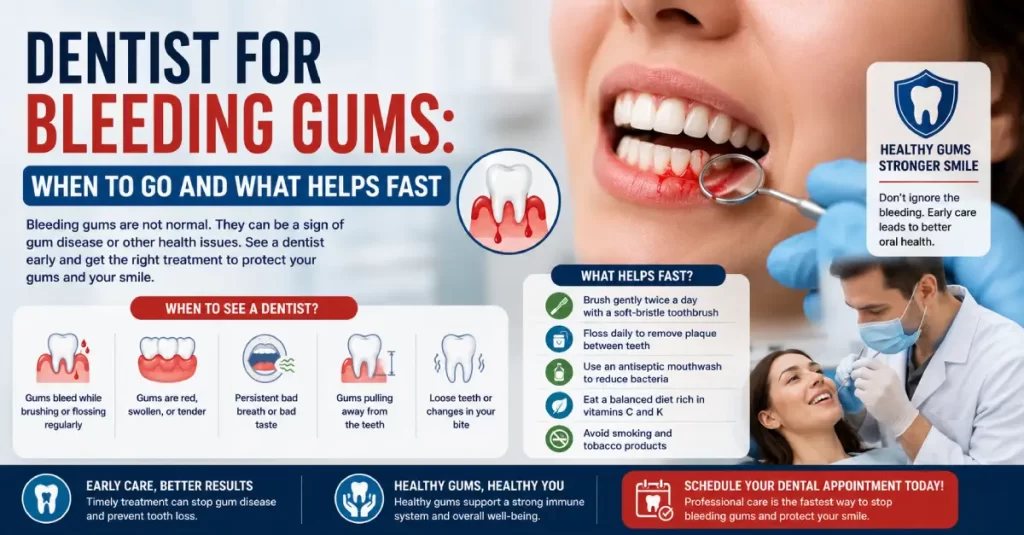
dentist for bleeding gums
Dentist for Bleeding Gums: When to Go and What Helps Fast
Okay so you spit into the sink after brushing and there’s that little pink swirl again. First thought, obviously, is did I brush too hard. Maybe you did. But if this keeps happening week after week, going to see a dentist for bleeding gums isn’t you being dramatic about it — it’s actually the right move. Your gums are basically waving a flag at you, and if you ignore it long enough the problem just keeps growing quietly in the background while you go about your day like nothing’s wrong.
I want to get into why this actually happens, what’s worth trying yourself before booking anything, and roughly where “give it a week” turns into “okay this needs a professional.” There are also a few signs that mean the bleeding’s not just irritation anymore, and I’ll get to those too.
Here’s the short version of why it happens at all: bleeding basically always comes down to inflammation, and inflammation basically always comes down to plaque hanging around your gumline for too long. Plaque is just this sticky bacteria film, builds up every single day whether you notice it or not, and once it hardens into tartar your gums start reacting — getting puffy, tender, bleeding at basically nothing. Funny thing is most people assume bleeding means they went too hard with the brush. Sometimes yeah, that’s it. But way more often it’s actually the opposite problem, not enough brushing, or brushing that just skips right over the gumline and leaves plaque sitting there for days.
Gingivitis is the name for early gum disease and it’s genuinely the number one reason behind bleeding gums, by a mile. It kicks in when plaque doesn’t get cleared out regularly enough, gum tissue swells up, gets tender to the touch. Here’s the actual good part though — gingivitis is reversible if you catch it and treat it right, which is more than you can say for what comes after if you just let it sit there untreated. A lot of people also just scrub way too hard thinking more pressure equals a cleaner mouth. It really doesn’t work like that. All it does is irritate the tissue, and over time it can actually push the gum back away from the tooth. Flossing too rough after a long break from flossing at all can cause some bleeding too, and on its own that doesn’t necessarily mean disease, just rustiness.
Sometimes bleeding gums are actually pointing at something else entirely going on in your body, which catches a lot of people off guard when they hear it. Diabetes, vitamin deficiencies, clotting disorders, all of these things can show up as gum bleeding before anything else about them becomes obvious to you. Pregnancy hormones cause this too, pretty commonly actually, and dentists usually just call it pregnancy gingivitis when it happens.
Not every single instance of bleeding gums means you need to drop everything and call a dentist right now. But there are a handful of signs worth paying real attention to instead of brushing off.
| Symptom | Likely Meaning | Urgency |
|---|---|---|
| Occasional light bleeding after flossing | Mild gum irritation | Monitor at home |
| Bleeding every time you brush | Possible gingivitis | See a dentist soon |
| Swollen, tender, red gums | Active inflammation | Book within 1-2 weeks |
| Persistent bad breath with bleeding | Bacterial buildup | See a dentist soon |
| Loose teeth alongside bleeding | Possible periodontitis | Urgent dental visit |
| Gum recession with bleeding | Advanced gum disease | Urgent dental visit |
| Bleeding with no clear cause | Possible underlying condition | See a dentist promptly |
Before you go booking anything, there’s real stuff worth trying yourself first, especially if this only just started and it’s still pretty mild. Grab a soft-bristled toothbrush if you’re not already using one, because hard bristles genuinely do more harm than good even though they feel like they’re scrubbing deeper. Try brushing at kind of an angle toward the gumline instead of straight on, since that’s actually where plaque likes to hide out, not really on the flat tooth surface. Floss every day, yeah even if it stings the first handful of times, because that bleeding usually calms down within a week or two once your gums remember what flossing feels like again. A warm salt water rinse after eating helps as well, nothing complicated, just half a teaspoon of salt in a cup of warm water. Cutting back on sugary snacks between meals matters more than people think too, since sugar is straight up feeding the bacteria that’s causing this whole mess. Give yourself two full weeks of actually sticking with all this before deciding it isn’t working, because most mild cases genuinely do turn around in that window. And pay attention to whether it’s actually getting better or just staying exactly the same. No real change after two weeks? That’s your sign to book something.
Most bleeding gums situations aren’t emergencies, to be clear. A few genuinely are though. Heavy bleeding that won’t quit even with light pressure, bleeding that comes with real pain or swelling in your face, bleeding alongside a fever that’s climbing — any of that means urgent care, not just waiting around for a normal appointment slot to open up. If you’re on blood thinners, or you’ve got a known clotting disorder, even bleeding that seems moderate deserves a faster response than it would for someone without that going on. Always worth mentioning whatever medications you’re on to whoever ends up seeing you, dentist or doctor either way.
Walking in for an appointment about this isn’t nearly as intimidating as people build it up to be in their heads beforehand. Usually kicks off with just a visual check, gum color, how swollen things look, how easily stuff bleeds when they gently probe near the gumline with their tool.
What Actually Happens at the Visit
- Gum assessment comes first. They measure pocket depth around each tooth with a small probe, checking for any signs things are getting worse.
- Plaque and tartar removal next. A proper cleaning, scaling if you want the fancy term for it, gets rid of what your toothbrush at home simply cannot reach.
- X-rays if they think it’s needed, mainly to check for bone loss around the roots that you’d never spot just by looking.
- Expect some honest questions too, about how often you brush, whether you floss, what you’re eating, since all of that genuinely feeds into gum health.
- A treatment plan if it comes to that point. Mild stuff usually just needs better habits at home. Anything more advanced might mean a deep cleaning.
- Follow-up gets scheduled for ongoing concerns, usually a check-in a few months out just to see how things are tracking.
And yeah, bleeding gums absolutely can mean gum disease is progressing, which is genuinely worth taking seriously instead of shrugging it off as no big deal. Gingivitis that never gets treated can turn into periodontitis eventually, which is the more serious stage where infection actually starts eating into the bone that’s holding your teeth in place. By that point bleeding usually shows up alongside recession, bad breath that won’t quit, and eventually teeth that feel loose if nothing about the situation changes. Honestly the real difference between these two stages mostly just comes down to timing more than anything dramatic. Catch it early, while it’s still just some bleeding and mild swelling, and fixing it is simple. Wait years on it and a small manageable thing turns into something that needs a whole lot more dental work than it ever should have.
Same mistakes keep popping up over and over with people dealing with this. Some figure bleeding means they should brush even less, when actually consistent, gentle brushing helps way more than just avoiding the area out of fear. Others stop flossing the second they see blood, which just lets plaque pile right back up and makes the next round worse than the last. Plenty of people just ignore it for months straight, hoping it fixes itself without changing a single habit along the way. Switching mouthwash brand after brand, hoping one of them magically solves it instead of dealing with the plaque underneath, that’s a pretty common one too. And a lot of people never even bring up bleeding gums during unrelated doctor visits, even though it could genuinely be flagging something like diabetes or a vitamin deficiency worth catching early on.
Vitamin C matters more here than most people realize, honestly, since a deficiency in it can directly cause bleeding and inflammation all on its own. Citrus fruits, bell peppers, leafy greens, easy stuff to add if your diet’s been a bit light in that department lately. Staying hydrated helps too, since saliva naturally washes food particles and bacteria out of your mouth all day long without you thinking about it. Sugar-free gum after a meal, when brushing right away isn’t really an option, gives a small boost in between actual proper cleanings as well.
Mild gingivitis-related bleeding usually clears up in about one to two weeks once you’re actually consistent about the care part. More advanced stuff, especially anything involving real bone loss, takes a lot longer and genuinely needs professional treatment rather than just home care by itself. How fast it heals up also just depends on what’s causing it in the first place. Pure technique issue, quick fix basically. Underlying condition involved somewhere, gums might keep bleeding until that gets handled properly too.
Frequently Asked Questions
Why do my gums bleed only when I floss?
That’s usually just mild inflammation from plaque sitting along the gumline where your toothbrush doesn’t quite reach. Regular, gentle flossing tends to clear this up within a couple weeks as your gums adjust back to it.
Is it normal for gums to bleed a little every day?
Not really, even if it feels pretty minor day to day. Daily bleeding usually means there’s ongoing inflammation that needs some attention, whether that’s just better home care or an actual dentist visit.
Can stress cause bleeding gums?
Indirectly, yeah, it can. Stress weakens your immune response and it often leads to skipped brushing or flossing too, both of which make gums a lot more prone to bleeding over time.
Should I stop brushing if my gums bleed?
No, honestly that makes it worse. Gentle, consistent brushing with a soft brush actually clears out the plaque that’s causing the bleeding, instead of letting it pile up while you avoid the spot out of worry.
Can bleeding gums heal without a dentist visit?
Mild cases often do improve just from better brushing and flossing on their own. But if it’s still going past two weeks despite you doing everything right at home, seeing a dentist is genuinely the better next move.
Are bleeding gums linked to heart disease?
Some research does point to a connection between gum disease and heart health, though it’s honestly still not fully worked out yet. Either way, it’s a decent enough reason not to just ignore ongoing bleeding.
What toothpaste is best for bleeding gums?
Toothpaste made specifically for sensitive or bleeding gums, usually with something anti-inflammatory in it, can help alongside actually brushing properly. It’s not going to replace dealing with the plaque buildup underneath everything, though.
Bleeding gums really aren’t something worth just sitting on and hoping quietly resolves itself over time. Most cases genuinely do respond to better brushing, regular flossing, and just a bit of patience over a couple weeks of sticking with it. When home care isn’t budging things at all, that’s really the point where a dentist visit stops being something you can put off.
Catching this stuff early keeps everything simple and cheap compared to what advanced gum disease eventually ends up costing you, both money and time. A quick visit now can genuinely save you from loose teeth, bone loss, or discomfort that just lingers for months on end.
If your gums have been bleeding for more than two weeks despite you doing everything right at home, stop waiting around for it to fix itself on its own. Book something soon, and finally give your gums the attention they’ve clearly been asking for this whole time.


