Why Is My Dog Panting So Much? Causes & Fast Relief Tips
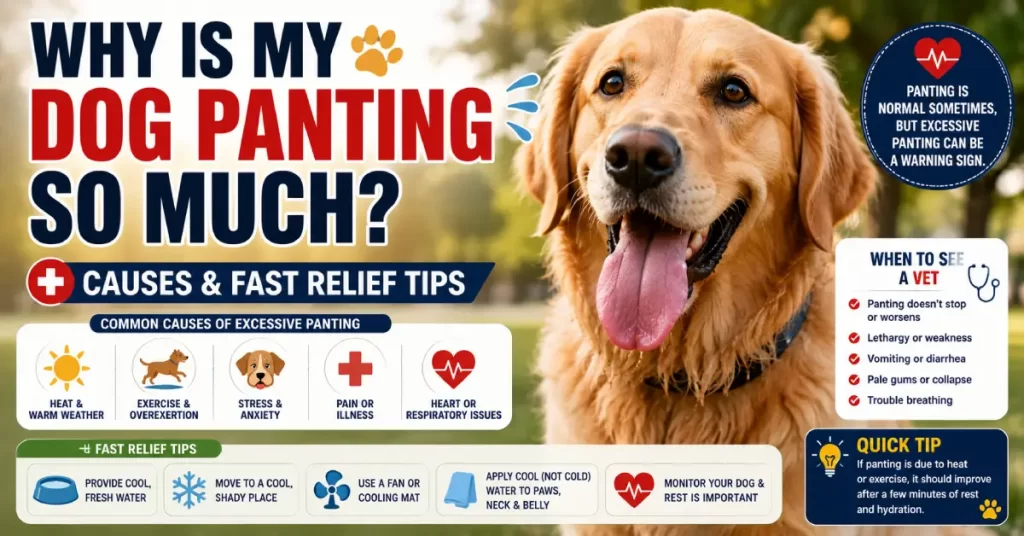
why is my dog panting so much
Meta Description: Wondering why is my dog panting so much? Here’s what’s usually going on, when it’s worth worrying, and a few things that actually help.
Introduction
Your dog’s been panting like they just ran a marathon. Except they haven’t moved off the couch in an hour. Sound familiar? If that’s what brought you here typing “why is my dog panting so much” into a search bar at 11pm, take a breath — nine times out of ten this isn’t an emergency.
Dogs pant for a bunch of reasons, and most of them are pretty dull, honestly. Heat. Excitement. A longer-than-usual walk. But every so often it’s their weird little way of saying something’s actually wrong, and that’s the part worth learning to notice. So let’s get into it.
What Counts as Normal Panting in Dogs?
Here’s something a lot of people don’t think about: dogs barely sweat. A little through the paw pads, sure, but that’s not doing much on a 90-degree afternoon. Panting is basically the AC unit. Tongue out, air moving fast, heat leaving the body — that’s the whole trick.
With most dogs I’ve been around, the normal version of this is fairly quiet and light, and it tapers off within maybe 10, 20 minutes once they’ve cooled down or settled. Dog does laps around the backyard, pants for a bit, flops onto the tile floor and passes out — that’s just the engine cooling itself. Nothing to stress about there.
How to Tell Normal Panting From Something Else
Honestly the easiest tell is rhythm. Normal panting has a steady in-and-out feel, and the dog still seems like themselves — tail going, eyes bright, not tense. Something’s off when it turns frantic, or just drags on way past the point it should’ve stopped.
- Tongue looks loose and relaxed, not curled or stiff
- Breathing calms down fairly fast once they’ve rested
- Dog is still alert, still acting like their usual self
- No whining, no pacing, no that hunched, tense posture
Common Reasons Why Is My Dog Panting So Much
There isn’t one tidy answer. Could be nothing. Could be something that needs a vet’s attention. Depends. Here’s the rundown of what usually causes it.
Heat and Overheating
Big one, this. Especially for thick-coated dogs or flat-faced breeds — pugs, bulldogs, that whole crew — who genuinely struggle with heat more than owners realize. Even a warm car for five minutes can tip a dog into overheating, and panting’s the first flag that their body’s working overtime to cool off.
Exercise and Excitement
Fetch at the park, a burst of zoomies, the mailman showing up at the door. Any of it can set off the panting. This kind usually fades within a few minutes on its own, tail still wagging the whole time, so it’s rarely anything to lose sleep over.
Stress or Anxiety
Dogs get anxious too, and panting’s often the tell. Thunderstorms, fireworks, the vet’s waiting room, being left home alone — all the usual suspects. You’ll typically spot other clues too. Pacing. Lip licking. Trying to squeeze under the bed.
Pain or Discomfort
People assume panting always means “too warm,” but pain triggers it just as much. An injury, a sore stomach, arthritis creeping in with age — any of these can push the breathing up, particularly if your dog also seems reluctant to move around or just isn’t quite themselves.
Underlying Health Conditions
Sometimes it’s something happening internally. Heart trouble. Lung issues. Cushing’s disease. Carrying too much weight can do it too, honestly — makes ordinary breathing feel like a chore. This is the category where duration and accompanying symptoms really matter.
Medications
Steroids especially have a reputation for causing extra panting as a side effect. Did your dog start something new recently, right around when this began? That timing’s usually your answer right there.
Quick comparison table if it’s useful:
| Cause | Typical Duration | Other Signs to Watch |
|---|---|---|
| Heat/Overheating | Until cooled down | Drooling, weakness, bright red gums |
| Exercise/Excitement | 10–20 minutes | Wagging tail, normal energy |
| Stress/Anxiety | Varies with trigger | Pacing, hiding, lip licking |
| Pain/Discomfort | Ongoing until treated | Limping, whining, restlessness |
| Health Conditions | Persistent or worsening | Coughing, lethargy, weight change |
| Medication Side Effect | While on medication | Increased thirst, appetite changes |
Why Does My Dog Pant Heavily at Night?
This one trips people up because the house is usually cool and quiet by then, so there’s no obvious trigger in sight. In my experience it often comes back to anxiety, an uncomfortable spot to sleep, or a health issue that’s just more noticeable once the day’s distractions fall away. Keeps happening? Worth a mention next time you’re at the vet.
When Should You Worry About Dog Breathing Heavily?
This is really the question underneath the question, isn’t it. Most panting’s harmless. But there are a handful of moments where it’s genuinely worth acting on — and you probably already have a decent gut sense of what’s “normal” for your own dog.
Call your vet if any of these show up alongside the panting:
- Comes on suddenly, no obvious reason for it
- Gums look blue, pale, or oddly bright red
- Doesn’t ease up even after rest and some water
- Wheezing, coughing, or a rattling sound with each breath
- Collapse, wobbliness, seeming way more out of it than usual
- Swollen belly plus restlessness together — this combo can mean bloat, a real emergency
Don’t sit on any of these. Get your dog seen.
How to Help a Dog That Is Panting Too Much?
Step-by-step guide
Once you’re fairly sure it’s not an emergency, there’s actually a lot you can do at home. Roughly how I’d handle it:
- Move to somewhere cool and shaded — indoors with a fan or the AC running works best if it’s hot.
- Offer cool water, but in small amounts — don’t let them chug an entire bowl in one go.
- Check the gums and tongue color. Pink’s what you want. Pale, blue, or bright red means call the vet, not later, now.
- Remove whatever’s stressing them out — noise, a tight harness, too many people in one room.
- Let them rest somewhere quiet. No more exercise until the breathing evens back out.
- A damp towel on the paws or belly helps, cooling them down gradually. Skip ice water though — can actually cause shock.
- Give it 20 to 30 minutes. Still panting hard after that? Time to call the vet.
Common Mistakes to Avoid
A few well-meaning moves actually backfire. Worth knowing about before you try them:
- Human medication like ibuprofen — genuinely toxic to dogs, don’t
- “Wearing them out” with more exercise when they’re already panting hard
- Ice-cold water instead of cool, gradual cooling
- Shrugging off repeat episodes just because last time it passed on its own
Tips to Prevent Excessive Panting in Dogs
A little prevention saves a lot of worry down the line, especially going into summer or firework season. Some habits worth building in:
- Water available at all times, indoors and on walks
- Skip exercise during the hottest stretch of the day
- Never leave a dog in a parked car — not even “just a minute,” people say that and it’s never just a minute
- Keep your dog at a healthy weight; extra pounds make breathing genuinely harder
- Ask your vet about extra precautions if you’ve got a flat-faced breed
- A calm space with familiar bedding helps a lot if anxiety’s the root cause
Frequently Asked Questions
Why is my dog panting so much even when it’s not hot?
Probably stress, pain, excitement, or something health-related rather than temperature. Watch for restlessness or appetite changes, and if it drags on more than a day or two without a clear cause, check with your vet.
Is heavy panting a sign of pain in dogs?
It can be. Dogs often pant through discomfort, especially alongside restlessness, whining, or reluctance to move normally. If pain seems likely, a vet visit is really the safest way to pin down what’s going on.
Can anxiety cause a dog to pant a lot?
Yeah, pretty commonly actually. Storms, car rides, being left home alone — all classic triggers. You’ll usually notice pacing or lip licking too. A calm, familiar space does a lot to ease this over time.
How long is too long for a dog to pant?
Still going strong after 20 to 30 minutes of rest somewhere cool? Pay closer attention. Panting that lingers or worsens, especially paired with other symptoms, is worth a call to the vet.
Should I take my dog to the vet for heavy panting?
If it came on suddenly, isn’t improving with rest, or shows up with pale gums, coughing, or collapse — yes, get there soon. Milder, occasional panting on its own is usually fine to just watch.
Do certain dog breeds pant more than others?
Definitely. Flat-faced breeds — bulldogs, pugs, boxers — tend to pant more since their airways are narrower to begin with, which makes cooling off harder, especially in warm weather.
Can old age cause a dog to pant more?
It can, yeah. Older dogs often deal with arthritis, heart changes, or reduced lung capacity, and any of those can mean more frequent panting, even from something mild like a short walk.
What does it mean if my dog’s panting comes with a swollen belly?
That combination can point to bloat — a genuinely life-threatening emergency, especially in bigger breeds. See this? Don’t wait around. Get to an emergency vet right away.
Conclusion
Panting’s such a normal part of dog life that it’s easy to tune out, until suddenly it feels different and you start wondering if something’s wrong. Most of the time, why your dog is panting so much comes down to something simple — heat, activity, a bit of excitement — and it sorts itself out with rest and water.
Still, it pays to stay tuned in. A sudden change, an odd gum color, panting that shows up bundled with other symptoms — that’s your dog telling you something, even without words for it. Trusting that instinct is honestly a big chunk of being a good dog owner.
If something feels off, don’t talk yourself out of checking. A quick call to your vet costs you nothing, and it might catch something real before it turns into a bigger problem.


