Narrow Angle Glaucoma: Warning Signs & Simple Treatment Guide
narrow angle glaucoma
Narrow Angle Glaucoma: What It Is and Why You Shouldn’t Ignore It
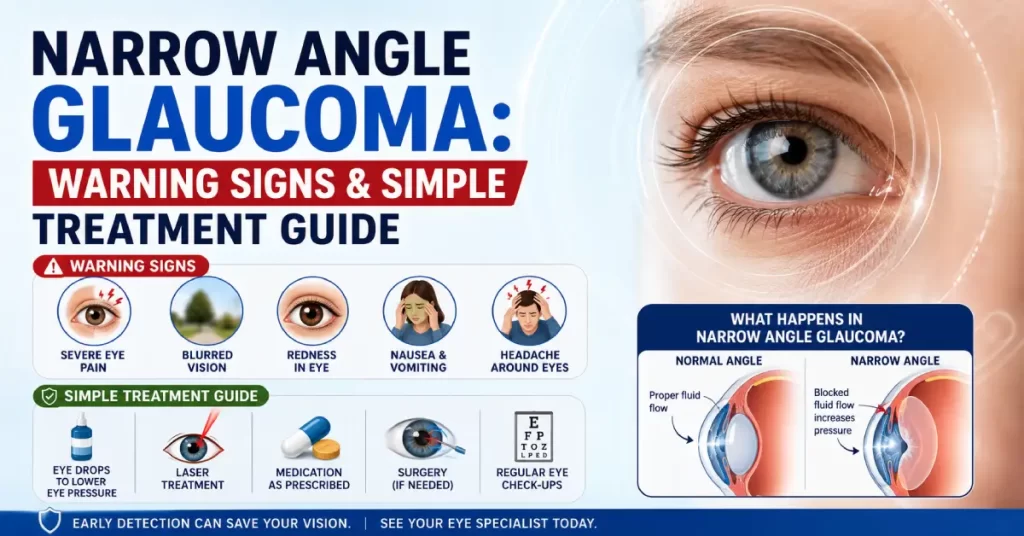
Sudden eye pain. Blurry vision that comes out of nowhere. A headache that won’t quit, maybe nausea creeping in on top of it. Could be narrow angle glaucoma, and look — this isn’t the kind of thing you wave off as “just tired eyes” and go back to whatever you were doing. Other forms of glaucoma creep up over years, quietly, without anyone really noticing. This one’s different. Hours, sometimes, is all it takes to go from fine to emergency.
Once you get what’s actually happening inside the eye though, it stops feeling like some scary unknown. So let’s get into it — what causes it, how you’d catch the warning signs before things spiral, what treatment actually involves once you’re in a doctor’s office. No dense jargon. Just the parts that matter.
What Is Narrow Angle Glaucoma, Exactly?
Here’s the short version. The drainage angle inside the eye — that’s the space where fluid normally flows out — gets too narrow, or straight up blocked. That fluid (aqueous humor, technically) has to go somewhere. Can’t drain properly, pressure builds. Fast.
Some doctors call it angle-closure glaucoma instead. Same condition, different label, don’t let that confuse you. People lump this in with the more common open-angle version all the time, but they’re really nothing alike. One’s slow, drawn out over years. This one can show up overnight. That gap matters more than you’d think for how fast you need to react.
Why Does the Angle Matter So Much?
Because it’s basically the eye’s only way to drain. That’s it. Block it even partway and the fluid’s got nowhere left to go. Pressure that builds up like that can start damaging the optic nerve within hours — not months, like most people assume eye problems work. That timeline, honestly, is the whole reason this condition gets treated so differently.
What Causes Narrow Angle Glaucoma?
No one single cause. But a handful of factors keep coming up again and again in the cases doctors actually treat.
Some people are just born with a shallower anterior chamber than average — less room between iris and cornea from day one, nothing to do with lifestyle. Farsightedness tends to pair with smaller eyes and narrower angles too, for what it’s worth. Age plays a part as well, since the eye’s lens thickens gradually and pushes the iris forward bit by bit. Certain medications matter here — allergy pills, some antidepressants, decongestants, these can set off an attack in someone who’s already at risk. Dim lighting’s sneaky in its own way too. Pupils dilate in low light, and that crowds the drainage angle even more than usual. And genetics, unsurprisingly, plays a real role in who ends up dealing with any of this.
Who Is Most at Risk?
People past 40 turn up more often in the numbers, women more than men. Asian and Inuit populations carry a higher genetic risk too, mostly tied to eye shape and size rather than anything you’re doing wrong. If it runs in your family — just say so at your next eye appointment. Costs you nothing, might matter a lot later.
Symptoms Worth Recognizing Immediately
This is honestly where narrow angle glaucoma stands apart from almost every other eye condition out there. Symptoms hit suddenly. You won’t miss them once they show up.
| Symptom | What It Feels Like |
|---|---|
| Severe eye pain | Sharp, throbbing pain in one eye |
| Blurred vision | Vision suddenly looks foggy or dim |
| Halos around lights | Rainbow rings around lamps or headlights |
| Nausea and vomiting | Often shows up right alongside the eye pain |
| Headache | Usually centered around the affected eye |
| Red eye | Visible redness, sometimes a hard-feeling eyeball |
A few of these hitting at once — sudden pain plus nausea, say — isn’t wait-and-see territory. That’s an ER trip, plain and simple.
How Is Narrow Angle Glaucoma Diagnosed?
Usually starts with tonometry. Quick, painless, just measures pressure. Then the doctor looks straight at the drainage angle through a special lens, something called gonioscopy. Few minutes, tops. But it tells them almost everything about where your risk actually sits.
What to Do If You Notice Symptoms of an Acute Attack
Get to emergency care. Now, not tomorrow morning, and definitely not after trying to sleep through it — that just gives pressure more time to climb unchecked.
Complete Steps
- Stay out of dim rooms. Bright, even lighting keeps the pupil from dilating further.
- Mention any recent medications. Some drugs make an attack noticeably worse.
- Get pressure-lowering drops started right away — usually the first move in an ER or clinic.
- Follow up on laser scheduling once pressure’s under control, since a permanent fix usually comes next.
- Get the other eye checked too. It often shares the same narrow angle, even if it hasn’t flared up yet.
Lots of people figure the pain will just pass eventually. It won’t, generally speaking. Pressure keeps climbing the longer treatment’s put off.
Treatment Options for Narrow Angle Glaucoma
Depends on the situation — mid-attack right now, or catching narrow risk early before anything’s actually gone wrong yet.
Emergency treatment usually opens with pressure-lowering drops, sometimes paired with oral or IV medication depending how severe things look. Laser peripheral iridotomy often comes next. Quick procedure. Creates a tiny opening in the iris so fluid can finally drain the way it’s supposed to. Pain and nausea get handled at the same time, since they tend to travel together.
Long-Term Management
Once things calm down, doctors usually suggest the same laser procedure for the other eye too — purely preventive, nothing wrong with it yet. Pressure checks every few months after that catch anything recurring before it snowballs into a real problem again.
Step-by-Step Guide: Laser Peripheral Iridotomy Explained
Method
- Numbing drops go in first. No real pain during the actual procedure because of this.
- A special lens gets placed on the eye so the doctor can see the iris clearly.
- A laser opens a tiny hole at the outer edge of the iris — few minutes, tops.
- Fluid starts draining through that new opening almost right away.
- Pressure gets rechecked on the spot, before you head home.
- A follow-up gets booked within a week or two, just to confirm healing’s on track.
Reads intimidating on paper, sure. Most people say afterward it was quicker, and way less uncomfortable, than they’d braced themselves for.
Can Narrow Angle Glaucoma Be Prevented?
Comes down to catching risk factors early rather than scrambling once an attack’s already underway.
- Get regular eye exams, especially once you’re past your 40s
- Mention family history of glaucoma, even in passing, at checkups
- Ask about your drainage angle if you’re farsighted and due for an exam anyway
- Skip decongestants or antihistamines you don’t strictly need if you’re already at risk
- Ask about preventive laser iridotomy if a doctor spots narrowing before symptoms even start
Does Diet or Lifestyle Play Any Role?
Not much, honestly, not compared to other eye conditions. This one’s mostly structural — tied to the actual shape and size of the eye itself. Staying hydrated, skipping long stretches in dark rooms, that eases minor pressure swings sure, but none of it fixes an angle that’s already narrow to begin with.
Narrow Angle Glaucoma vs Open Angle Glaucoma
People mix these two up all the time, even though they play out pretty differently once you’re actually dealing with either one.
| Feature | Narrow Angle Glaucoma | Open Angle Glaucoma |
|---|---|---|
| Onset | Sudden, often within hours | Gradual, over months or years |
| Pain | Severe, hard to miss | Usually painless |
| Vision loss | Can happen fast if untreated | Slow, often unnoticed until advanced |
| Main cause | Blocked or narrow drainage angle | Angle stays open but filters poorly |
| Treatment urgency | Emergency | Routine, ongoing management |
Mistakes People Commonly Make
Assuming the pain will just pass with rest — that’s the big one, easily the most common. Waiting till morning instead of just going to the ER runs a close second. Skipping mention of family history at checkups doesn’t help matters either, and neither does skipping the second eye’s evaluation once the first’s already had an attack. Popping allergy or cold medication without checking your risk first rounds out the list. Small stuff on paper. Adds up fast once you’re actually living through it.
Is Narrow Angle Glaucoma Dangerous?
Yes. Genuinely, seriously yes. Left untreated, pressure inside the eye can damage the optic nerve within hours, and that kind of damage tends to stick around permanently. Not many eye conditions exist where waiting half a day changes the outcome this drastically.
When Should You See a Doctor?
Sudden eye pain, blurred vision, halos around lights — especially with nausea or a headache thrown into the mix — means get to an ER or eye clinic, right now. Not a symptom set that improves by waiting it out.
Wrapping It Up
Narrow angle glaucoma feels frightening the moment symptoms show up, mostly because everything moves faster than people expect from an eye issue. But treated quickly, most people keep their vision fully intact, no lasting damage at all.
Regular exams. Knowing your family history. Catching the warning signs early. That combination, more than anything else, is what actually makes the difference here. Treating a narrow angle before it closes beats dealing with a full-blown attack afterward, every single time.
Noticed anything like this lately, or does glaucoma run in your family? Don’t sit on it. Book an eye exam soon, and if symptoms hit suddenly, get to emergency care without waiting around.
Frequently Asked Questions
Can narrow angle glaucoma be cured completely?
Laser iridotomy fixes the underlying drainage problem for most people, and future attacks stop happening as a result. Not a cure exactly, in the strict sense, but it does remove the main risk for good, at least for the treated eye.
Is narrow angle glaucoma the same as an emergency?
An acute attack, without question. Someone with just a narrow angle and no symptoms isn’t quite in that territory yet, though they should still get checked out fairly soon regardless.
How fast can vision loss happen during an attack?
Hours, sometimes, is genuinely all it takes. That’s exactly why doctors push so hard for emergency care right away instead of waiting to see if things settle on their own.
Does narrow angle glaucoma affect both eyes?
Often, eventually. Even when just one eye has the actual attack, the other frequently shares the same narrow angle underneath and gets treated preventively with iridotomy not long after.
Are certain ethnicities more prone to this condition?
People of Asian and Inuit descent carry a higher genetic risk overall, tied mostly to smaller eye size and shallower chambers. That said, anyone can develop this regardless of background.
Can medications really trigger an attack?
They can, yes. Certain antihistamines, decongestants, and some antidepressants dilate the pupil enough to set one off in someone already predisposed. Worth flagging your eye history before starting anything new.
Is surgery always needed for narrow angle glaucoma?
Not immediately, though laser iridotomy’s the standard first move for most doctors. Rare, more complicated cases sometimes need extra surgical steps if the laser alone doesn’t fully sort out pressure.
Can narrow angle glaucoma come back after treatment?
Uncommon once iridotomy’s done and healed properly, since the new opening stops the same blockage from happening again. Follow-up checks still matter, mostly just to catch anything unusual early on.


