Seltzer Water vs Sparkling Water: The Real Difference
seltzer water vs sparkling water
Seltzer Water vs Sparkling Water: The Real Difference
You’re in the drinks aisle, five kinds of bubbly water staring back at you, and none of the labels really explain what makes them different. Seltzer water vs sparkling water is one of those comparisons nobody bothers researching — you just grab whatever can looks decent and move on with your day. Which is fine, mostly. But they’re not the same drink, not once you look closely.
This won’t be ten paragraphs dressed up around a non-answer. What follows is where each one comes from, what’s actually sitting in the bottle, how they compare taste-wise, and which makes more sense depending on what you’re doing with it. No brand pushing anything here, just what’s true.
What Is Seltzer Water?
Water, plus carbon dioxide pushed in under pressure. That’s the entire recipe. No salt, no calcium, nothing extra unless the can literally says “flavored.” About as plain as fizzy water gets, and that plainness is the whole point for a lot of drinkers.
Seltzer works so well as a mixer base because it doesn’t compete with anything. Splash in some lime essence or raspberry flavoring and it comes through clean. Try that with a mineral-heavy sparkling water instead and the flavors kind of muddy each other.
What Is Sparkling Water?
This one’s murkier. Real sparkling water comes out of underground mineral springs, where carbonation happens on its own, no equipment involved. A handful of brands still bottle it that way. But most of what says “sparkling water” on a supermarket shelf is filtered water with minerals mixed back in afterward, built to taste like spring water even though it isn’t one.
That mineral content is the giveaway. Calcium, magnesium, occasionally sodium — small amounts, but enough to notice on the tongue. Heavier than seltzer, sometimes with a faint salty edge to it. People tend to assume every “sparkling” label means genuinely spring-sourced. Most don’t, and that gap between the label and the actual production process is basically the whole comparison in a nutshell.
Seltzer Water vs Sparkling Water: Key Differences
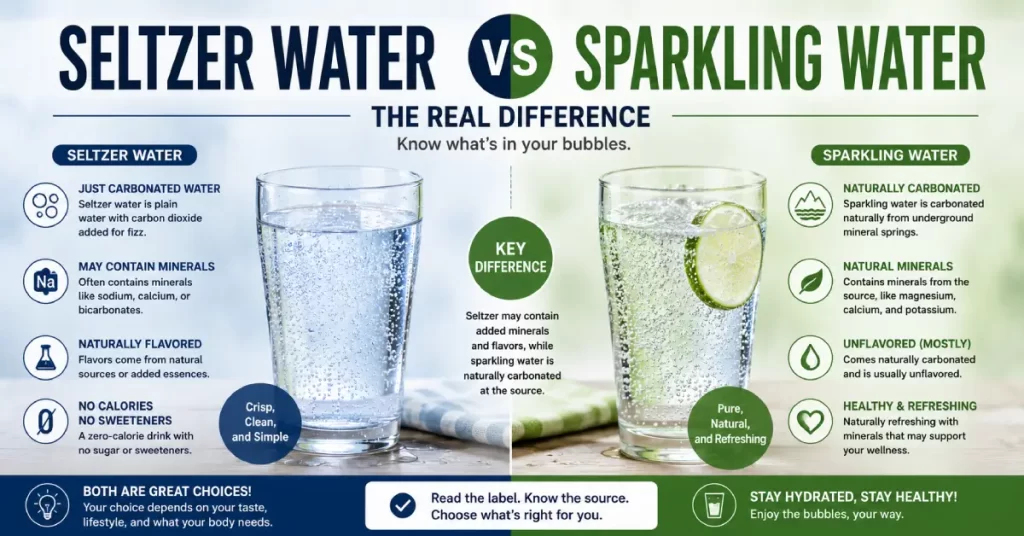
The differences show up pretty clearly once you know what to look for. Seltzer is carbonated plain water with no mineral additions, which is why it tastes neutral and works so well as a mixer. Sparkling water carries calcium, magnesium, or sodium, which gives it a fuller, sometimes salty character that holds up better on its own.
Carbonation strength tends to run stronger and more consistent in seltzer, while sparkling water varies more from brand to brand, occasionally landing gentler on the tongue. Sodium is where things really split: seltzer typically sits at zero, while sparkling water can run anywhere from 0 to 75mg per serving depending on where it was bottled and what minerals went into it. A quick label check settles which one you’re actually holding.
How Is Carbonated Water Actually Made?
Nobody thinks about this until a can goes flat too fast, and then suddenly it’s the only thing on their mind. The short version: filtered water gets chilled down first, since cold water holds carbon dioxide far better than warm water does. You can test this yourself with a home carbonation machine and a glass of warm tap water. The fizz barely holds.
From there, the water passes through a carbonation chamber where CO2 gets forced in under pressure, trapping those small bubbles you see when you crack the can open. For sparkling water specifically, this is where calcium or magnesium salts get added back in, recreating that spring-like taste artificially. Everything gets bottled or canned cold and fast, since warm temperatures let gas slip out before the seal’s even on. Keeping the can upright and cold afterward matters too. Leave one on its side too long in a hot car and you’ll notice the difference the moment you open it.
A home carbonation machine ends up tasting closer to seltzer than sparkling water for exactly this reason. You’re skipping the mineral-adding step entirely, whether or not you meant to.
Which One Actually Tastes Better?
Depends entirely who you ask. Every informal taste comparison I’ve come across splits close to fifty-fifty. Seltzer wins over people who want water to taste like water, bubbles included and nothing else. Sparkling water wins over people who like a little edge to it, that faint salty or mineral note some folks compare to a mid-range sparkling wine.
What you’re pairing it with usually matters more than the water itself. Seltzer tends to work better in juice, syrup, or a cocktail since it stays out of the way and lets other flavors lead. Sparkling water holds up better solo, or next to a meal, the way it gets poured at a decent restaurant without anyone even asking which kind you want.
Health Benefits and Side Effects
Both hydrate exactly like still water does. That old idea about carbonation dehydrating you got debunked years ago and still somehow won’t go away. Neither has sugar or calories in plain form, so both work as a reasonable soda swap if that’s your actual goal here.
The real gap between them is mineral intake, and it’s tiny either way. Sparkling water’s trace calcium or magnesium isn’t covering your daily needs by any stretch, just a small bonus seltzer doesn’t offer at all. If you’re watching sodium, seltzer’s generally the safer pick since most brands sit at zero, while sparkling water can carry a noticeable amount per can. Worth a glance at the label if that matters to you personally.
On the downside, bloating or a gassy feeling can show up if your stomach’s sensitive, and that applies to either type, not just one over the other. The carbonic acid formed during the process is mildly acidic too, so heavy daily sipping might wear on enamel over time, more so with flavored versions carrying citric acid on top of it. Some “healthy” flavored seltzers still sneak sugar or sweeteners in despite the packaging, so it’s worth checking labels rather than trusting the marketing outright. And people managing IBS or reflux sometimes find carbonation of any kind makes symptoms worse. Your own tolerance settles that faster than any article could.
Seltzer Water vs Sparkling Water vs Club Soda vs Tonic Water
It doesn’t stop at two options, unfortunately. Club soda and tonic water get pulled into this conversation constantly, and neither is just a rebrand of the other two.
Club soda has minerals added, usually potassium bicarbonate or sodium citrate, mostly to boost flavor rather than mimic a natural spring. Tonic water stands apart entirely. It’s got quinine in it for that distinct bitter taste, plus sugar in most versions you’ll find on a shelf, so it really doesn’t belong in the same health conversation as the other three at all. If you’re comparing calories or sugar content, tonic water is the outlier by a wide margin.
Which One Should You Choose?
It comes down to what you’re doing with it, not which one’s objectively “better,” since the health gap between them is close to nothing day to day. If you drink a lot of flavored fizzy water or mix drinks regularly, seltzer serves you better because it won’t clash with anything else in the glass.
Want something to sip solo, maybe with dinner? Sparkling water’s heavier texture probably suits you more. Check your sodium needs first if that’s relevant to you, think about how you’ll actually be drinking it, read the flavor label properly instead of assuming, and if you can, just try both back to back. Taste is personal enough that a quick side-by-side settles it faster than any article can. Pay attention to how your stomach reacts too — if one causes more bloating than the other, that’s really your answer regardless of what the label says.
Common Mistakes People Make When Buying Carbonated Water
A lot of people assume every sparkling water bottle came from a spring, when most grocery store versions are actually manufactured, with minerals mixed back in after the fact. Others grab flavored seltzer without a second glance at the label, since some brands quietly add sugar despite “natural” branding on the front. Swapping club soda for seltzer in a recipe without thinking twice is another one — those added minerals genuinely shift how a cocktail tastes, more than people expect.
Storage trips people up too. An opened bottle left on its side loses fizz faster than most people realize. And skipping the sodium check on sparkling water labels is a common oversight, especially for anyone managing blood pressure who probably should be paying closer attention to it than they are.
Why Does It Matter Which One You Pick?
It matters more if you’re watching sodium, mixing drinks professionally, or just care about consistent flavor from one can to the next. For most people though, the gap is small enough that personal taste should decide it. There’s no dramatic health advantage hiding in either one.
Frequently Asked Questions
Is seltzer water the same as sparkling water?
Not quite. Seltzer is carbonated water with nothing added. Sparkling water usually carries small amounts of minerals, natural or added, which gives it that slightly different, sometimes saltier taste.
Which is healthier, seltzer or sparkling water?
Neither wins outright. Both hydrate the same and sit at zero calories in plain form. Sodium and mineral content are the real differences, and they only matter much if you’re following a specific diet.
Can carbonated water damage your teeth?
Plain carbonated water is only mildly acidic, so normal drinking habits won’t cause real damage. Flavored versions with citric acid carry slightly more risk. Rinsing with plain water afterward isn’t a bad habit if you’re concerned about it.
Does sparkling water count toward daily water intake?
Yes, same as still water. The carbonation-dehydrates-you claim has been debunked repeatedly, and both seltzer and sparkling water count toward your fluid intake without any issue.
Why does my sparkling water taste salty?
Added minerals, usually sodium or potassium salts, mixed in to mimic a spring taste. Seltzer is your neutral option if you’d rather skip that flavor entirely.
Is tonic water the same as sparkling water?
No, and people mix these up constantly. Tonic water has quinine plus usually added sugar, giving it a bitter, sweetened flavor with nothing in common with sparkling water’s neutral or mineral profile.
Can I make sparkling water at home?
You can carbonate water at home, sure. Without adding minerals afterward though, what you’ve actually made is closer to seltzer. Some machines sell mineral drops separately if you want the closer match to true sparkling water.
Does flavored seltzer have sugar?
Depends on the brand entirely. Plenty use natural fruit essence with zero added sugar. Some quietly add sugar or sweeteners regardless of how they’re marketed, so checking the label is worth the ten seconds it takes.
Final Thoughts
Seltzer water vs sparkling water isn’t really a contest with a clear winner. It’s about matching the drink to what you actually need in that moment. Seltzer’s the neutral base for mixing and flavoring. Sparkling water brings more character when you’re drinking it straight, no additions.
Either choice beats reaching for soda. Both are low-calorie, both hydrate properly, and whatever differences exist come down to mineral content and taste rather than any hidden health edge one has over the other.
Next time you’re in that aisle, you’ll actually know what you’re grabbing instead of picking whatever’s cheapest. Try both over the next week, pay attention to how each sits with you, and let your own taste make the call, not the label.


