

What Is A Dangerous Low Blood Pressure For A Woman?
So… this question comes up a lot more than people say out loud. What is a dangerous low blood pressure for a woman? Sounds simple, but once you get into it, it’s not really a fixed number thing. Some women walk around with low readings and feel totally fine. No dizziness, no weakness, nothing. Others? Same numbers—and they feel like they might faint. That’s where it gets tricky.
From what I’ve seen (and honestly, even in real-life cases), the danger isn’t just the reading. It’s how your body reacts to it. If your blood pressure drops and you feel okay, it might not be a problem. But if it drops and suddenly you’re lightheaded, confused, or close to blacking out… that’s different.
So yeah, it’s not just “low equals dangerous.” It’s more like—low plus symptoms equals something you shouldn’t ignore.
Understanding Low Blood Pressure in Women
Low blood pressure sounds serious, but sometimes it really isn’t. That’s the confusing part. People hear “low” and assume something is wrong immediately. But the body doesn’t always work that way.
In simple terms, low blood pressure means the force of blood moving through your body is weaker than usual. That can affect how oxygen reaches your brain and other organs. But again—some people function perfectly fine like that.
Honestly, the better way to look at it is this: numbers matter, but symptoms matter more. Always.
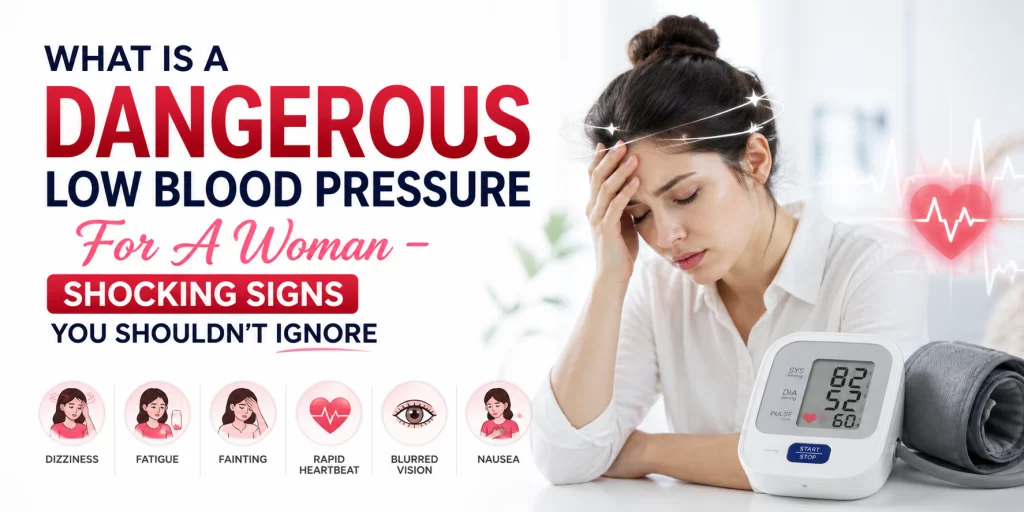
What Does Low Blood Pressure Mean?
Doctors usually say anything below 90 over 60 is low. That’s the general line. But here’s where people get confused—that number alone doesn’t decide danger.
You could have 90/60 and feel completely normal. Or even slightly lower and still be okay. But once symptoms start showing up—like dizziness or blurred vision—that’s when it starts meaning something.
So yeah, the number gives you a clue… but your body gives you the real answer.
Why Women Experience Low BP More Often?
This part doesn’t get talked about enough. Women deal with more blood pressure changes than men, mostly because of hormones. And those changes don’t always feel obvious at first.
Pregnancy, periods, menopause—all of these can shift how blood vessels behave. Sometimes they widen more than usual, which lowers pressure. Add things like dehydration or not eating properly, and it can drop even more.
I’ve seen many cases where women just ignore the signs. They think, “okay, just tired today.” But it keeps happening. That’s usually where the pattern starts.
What Is A Dangerous Low Blood Pressure For A Woman?
Alright, let’s get closer to the actual concern.
A dangerous level isn’t just “below normal.” It’s when blood pressure drops so much that your body can’t keep things stable anymore. Especially your brain—that’s usually the first to react.
If readings fall somewhere below 80/50, it starts getting concerning. And if it drops further—like near 70/40—that’s where it can turn serious pretty quickly.
A lot of people searching what is a dangerously low blood pressure for a woman are actually already feeling something off. Maybe dizziness. Maybe weakness. That’s usually the real trigger—not the number itself.
Normal vs Dangerous Blood Pressure Levels
Here’s a simple breakdown. Nothing fancy.
| Level | What It Means |
| 120/80 | Normal |
| 90/60 | Low but often okay |
| Around 80/50 | Getting concerning |
| 70/40 or lower | Dangerous zone |
But again—and yeah, I know I’m repeating this—it depends on symptoms too. Always.
When Should You Worry About Low BP?
You don’t need to panic over one low reading. That happens sometimes. But if it keeps happening, or comes with symptoms, that’s different.
Things like:
- feeling dizzy when standing
- vision going slightly dark
- random weakness
Those are early signs.
But if fainting happens—even once—that’s not something to ignore. That means your brain didn’t get enough blood, even if just for a moment.
Common Symptoms of Dangerously Low Blood Pressure
Symptoms usually show up before anything serious happens. The body gives warnings—it’s just that people don’t always notice them right away.
And honestly, many of these feel “normal” at first. That’s why they get ignored.
Early Warning Signs
These are the small ones. Easy to brush off.
- light dizziness
- feeling tired for no clear reason
- slight nausea
- blurry vision sometimes
You might think it’s just stress or lack of sleep. And yeah, sometimes it is. But if it keeps repeating, there’s probably more going on.
Severe Symptoms You Should Not Ignore
This is where things change.
Fainting is the big one. That’s the clearest signal that something dropped too low. Then there’s confusion, cold skin, trouble focusing… things just feel off.
If someone is actively searching what is dangerously low blood pressure for a woman, there’s a good chance they’re already noticing these signs.
At this stage, it’s not something to wait on.
Causes of Low Blood Pressure in Women
Low blood pressure doesn’t just appear randomly. There’s almost always a reason. Sometimes obvious. Sometimes not.
Lifestyle and Daily Habits
A lot of cases come down to simple things.
Not drinking enough water—that’s a big one. Dehydration lowers blood volume, and that drops pressure. Skipping meals can do the same. Your body just doesn’t have enough fuel.
Standing too long, especially in heat? That can trigger it too. Blood pools in the lower body, and the brain gets less for a moment.
These things sound small, but they add up.
Medical Conditions Behind Low BP
Then there are deeper causes.
Heart problems, hormone issues, infections—these can all affect blood pressure. Some medications can also lower it more than expected.
This is where it’s important not to guess. If symptoms feel frequent or strong, it’s better to actually check what’s behind it.
How to Check Blood Pressure at Home?
This part is actually simple. You don’t need anything complicated.
Step-by-step guide
- Sit down and relax for a few minutes first
- Wrap the cuff around your upper arm—not too tight
- Keep your arm steady, around heart level
- Press start and just stay still
- Read the numbers and maybe write them down
That’s it. Takes a few minutes, but gives you a clear picture over time.
How to Treat and Manage Low Blood Pressure
Alright… So once you understand what is a dangerous low blood pressure for a woman, the next question kind of comes naturally—what do you actually do about it?
And honestly, the answer isn’t always “take medicine.” That’s what most people assume. But in a lot of cases, it’s not that serious. Or at least, not serious enough for medication right away.
Sometimes it’s just… daily habits.
I’ve seen people deal with constant dizziness, and the fix turned out to be something as simple as drinking more water. Sounds almost too basic, but yeah—it happens more than you’d expect.
At the same time, not every case is mild. If the drop is sharp or keeps happening again and again, then you can’t just ignore it and hope it settles.
So it’s kind of a mix. You start simple. Then adjust depending on how your body responds.
Natural Remedies
Let’s start with the easy stuff. The things people usually overlook.
Water—this one matters more than people think. If your body doesn’t have enough fluids, your blood volume drops. And when that happens, pressure drops too. So yeah, just drinking regularly (even when you’re not super thirsty) can help stabilize things.
Now… salt. This one is a bit tricky.
A small increase in salt can raise blood pressure slightly. That’s why people with low BP are sometimes told to include a bit more in their diet. But don’t go overboard. Too much flips the problem the other way.
Food habits matter too. Skipping meals? That’s a common trigger. Long gaps without eating can make you feel weak or lightheaded. I’ve seen this a lot—especially with busy routines where people just forget to eat properly.
And one small thing that people ignore—how you stand up.
If you get up too quickly, especially from lying down, your body doesn’t adjust fast enough. That’s when you feel that sudden dizziness. So yeah, slowing that down actually helps.
Medical Treatments
Now, if things are not improving—or symptoms feel stronger—this is where medical help comes in. Doctors don’t just treat “low blood pressure” directly. They usually try to find the cause first. That part is important.
If it’s due to dehydration, they fix that. If it’s linked to hormones or heart issues, then treatment goes deeper. Sometimes medication is used to help tighten blood vessels or increase blood volume.
But here’s the thing—most people don’t need heavy treatment unless the condition is clearly serious. Still… ignoring repeated symptoms isn’t a good idea either. That’s where problems build up quietly.
Tips to Prevent Blood Pressure from Dropping
Prevention is actually easier than fixing the problem later. Once you notice your triggers, you can avoid a lot of uncomfortable situations.
And no, this isn’t about doing anything complicated.
Daily Prevention Habits
Some of these are obvious. But still—people skip them.
- Drink water throughout the day, not just when you feel thirsty
- Eat regularly, even small meals if needed
- Don’t stand still for too long, especially in heat
- Get up slowly—seriously, this one helps more than you think
- Try not to stay in very hot environments for long
That’s it.
Simple stuff. But when ignored, these are usually the exact reasons symptoms keep coming back.
Conclusion
So… coming back to the main question—what is a dangerous low blood pressure for a woman? It’s not just about hitting a certain number. It really isn’t. You could have a low reading and feel completely normal. Or you could have a slightly higher one and still feel dizzy or weak. That’s why the body matters more than the number. If symptoms show up—especially things like fainting or confusion—that’s your sign to take it seriously.
Otherwise, small daily habits can go a long way. Staying hydrated, eating properly, and just being a bit more aware of how your body reacts… that already solves a lot of cases.
And yeah, if something feels off again and again, better to check it than guess.
FAQs
Is low blood pressure always dangerous for women?
Not really. Some women naturally have low readings and feel completely fine. It becomes a problem only when symptoms show up—like dizziness, weakness, or fainting.
What number is considered too low for blood pressure?
Generally below 90/60 is low. But “too low” depends on symptoms. If it drops near 70/40 and causes issues, that’s when it becomes dangerous.
Can dehydration cause low blood pressure?
Yes, very easily. When your body loses fluids, blood volume drops. That leads to lower pressure and sometimes dizziness or fatigue.
When should I see a doctor for low blood pressure?
If symptoms keep happening—like frequent dizziness or fainting—it’s better to get checked. Occasional drops are fine, but repeated ones shouldn’t be ignored.
How can I quickly raise low blood pressure at home?
Drink water, eat something light with a bit of salt, and lie down if needed. These help temporarily, but long-term fixes depend on the cause.


